
Custom Search
Showing posts with label economy. Show all posts
Showing posts with label economy. Show all posts
Wednesday, October 06, 2010


Tuesday, September 21, 2010
Saturday, August 21, 2010
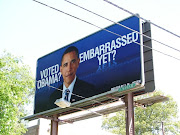
Obama now blames poor job numbers on congressional inaction. Wait! His party runs Congress
Just a few minor things to catch up on for the weekend now that the Fundraiser-in-Chief has gone on another vacation (Don't worry though. White House chef Sam Kass went along, so the first family need not eat ordinary human food.)
-- The Congressional Budget Office says the 2010 federal deficit will be in excess of $1.3 trillion, as in $1,000,000,000,000+. (BTW, the next level we'll be talking about out of Washington is quadrillion, which has fifteen 0's.)
-- Despite Vice President Joe Biden's April boast that administration stimulus spending would spur the economy to add a half-million jobs a month by now, initial unemployment claims jumped a half-million last week, the worst since last November, as national unemployment remains at 9.5% and the economy sheds 131,000 more jobs.
-- But the economy's going great at the Democratic National Committee, which reports collecting $11.5 million from donors in July on top of the $53.8 million already taken in from various sources this year. The president just devoted three workdays across five states to rake in several more millions for his party.
-- But before leaving for his ninth presidential vacation, 10 days at a.......secluded estate on Martha's Vineyard, Obama devoted four minutes in the White House driveway to a special statement on the latest disappointing jobs numbers. (Full text, as usual, can be read on the jump, along with a brief reaction from the Republican National Committee chairman.)
No questions allowed because the president didn't want to explain why despite the administration's announced Recovery Summer Program, the jobs numbers have started going backward again after 19 months of promises and $787 billion in alleged stimulation spending. Because, faced with the uncertainty of the economy and the certainty of new taxes after Nov. 2, employers are holding back on hiring.
Full Story L.A Times
-- The Congressional Budget Office says the 2010 federal deficit will be in excess of $1.3 trillion, as in $1,000,000,000,000+. (BTW, the next level we'll be talking about out of Washington is quadrillion, which has fifteen 0's.)
-- Despite Vice President Joe Biden's April boast that administration stimulus spending would spur the economy to add a half-million jobs a month by now, initial unemployment claims jumped a half-million last week, the worst since last November, as national unemployment remains at 9.5% and the economy sheds 131,000 more jobs.
-- But the economy's going great at the Democratic National Committee, which reports collecting $11.5 million from donors in July on top of the $53.8 million already taken in from various sources this year. The president just devoted three workdays across five states to rake in several more millions for his party.
-- But before leaving for his ninth presidential vacation, 10 days at a.......secluded estate on Martha's Vineyard, Obama devoted four minutes in the White House driveway to a special statement on the latest disappointing jobs numbers. (Full text, as usual, can be read on the jump, along with a brief reaction from the Republican National Committee chairman.)
No questions allowed because the president didn't want to explain why despite the administration's announced Recovery Summer Program, the jobs numbers have started going backward again after 19 months of promises and $787 billion in alleged stimulation spending. Because, faced with the uncertainty of the economy and the certainty of new taxes after Nov. 2, employers are holding back on hiring.
Full Story L.A Times
Friday, July 30, 2010
Recession was deeper than gov't previously thought
The Commerce Department, in revisions issued Friday, estimates the economy shrank 2.6 percent last year -- the steepest drop since 1946. That's worse than the 2.4 percent decline originally estimated.
Monday, June 30, 2008
Luck - A president's best jobs plan
A year from now, economists say the economy will be stronger and unemployment lower - regardless of whether John McCain or Barack Obama wins.
By Chris Isidore, CNNMoney.com senior writer
NEW YORK (CNNMoney.com) -- Today's troubles in the U.S. economy and labor market could very well turn out to be a lucky break for the next president, no matter who is elected.
Economists say that the current job losses and problem of rising unemployment will come to an end sometime in 2009.
And that will be perfect timing for whoever has moved into the Oval Office.
"Almost no matter what a president does, there should be employment growth during the first part of his term, because when the rate is high, it tends to go back down," said Joel Prakken, chairman of Macroeconomic Advisors. "On the other side of that coin, if you come into the office when the unemployment rate is unusually low, it's likely to go up."
When the Labor Department on Thursday reports the unemployment rate for June, economists are forecasting that employers will have shaved an additional 50,000 jobs from their payrolls, the sixth straight month that the economy will have lost jobs.
And even though the gross domestic product, the broadest measure of the nation's economic activity, was up at a modest 1% annual rate in the first quarter, a growing consensus among economists is that the economy fell into a recession either in late 2007 or early this year.
But post-World War II recessions typically last between eight and 18 months before the business cycle kick ins and spurs economic growth. Most economists, including many of those who now see a recession, believe growth will return later this year. Even most of those who see a longer recession are projecting the economy will turn around in early 2009.
A rash of deep rate cuts by the Federal Reserve over the last nine months, coupled with the expected bottoming out of the battered real estate and home building industries, should help the economy to get back on its feet.
Rising unemployment and job losses are still forecast to continue into 2009, even with a recovery, because employment tends to lag a recovery. But by late 2009 just about every economist is looking for an improving labor market.
Presidents can set the stage
Few economists would argue that a president's economic policies don't have an impact on jobs, income and growth. But most also believe that too much credit or blame is attributed to the president for the economy's performance by the general public.
Broad factors - the business cycle, the strength of economies around the world, monetary policy set by the Federal Reserve and technological advances - all play as great, or greater, a role in the economy's health as does a president's policies.
"Presidents can create an environment conducive to job creation over several years," said Lakshman Achuthan, the managing director of the Economic Cycle Research Institute. "But when you're talking about the coming year, the president can't do much other than accept blame or credit for job creation as the case may be."
Many economists who praise the policies of Bill Clinton say he doesn't deserve credit for all of the record 23 millions jobs added to U.S. payrolls on his watch. Instead, they credit technological improvements, such as the growth of the Internet and fiber optics, which led to great gains in productivity.
"There's no question that luck and factors outside the president's control are very important," said Jason Furman, the economic policy director for Democrat Barack Obama's campaign.
Short-term vs. the long view
Of course, Furman and his counterparts in the campaign of Republican John McCain are quick to argue that the economy will be stronger and jobs more plentiful if their candidate is elected.
"What the president does is help create the economic conditions that contribute to the private sector creating the jobs," Furman said. "In the short-run, you can help give the economy a kick-start to get it up to its potential. In the long run you can help improve the potential."
Douglas Holtz-Eakin, senior policy advisor for McCain, argues that his candidate would be better for jobs and the economy than would Obama, even if he also acknowledges that, especially in the short-term, the president has limited impact on those issues.
"You don't control directly from the White House hiring decisions or economic decision making. That's a good thing," Holtz-Eakin said. "But you do set the environment. You do decide on the regulatory approach, on tax policy, the kinds of things that ultimately have big impacts on the functioning of the economy."
Not surprisingly, economists are split on which campaigns' policy proposals are the best for jobs and the economy. Yet there is widespread agreement that the number of jobs and the unemployment rate a year from today, or even two or eight years from now, will be only partly due to those policies.
Achuthan said it's a tossup how much a healthy job market can be spurred by presidential policies and how much is the result of timing.
"Let's say 50% is luck and 50% were policies that don't mess up the luck," he said.
By Chris Isidore, CNNMoney.com senior writer
NEW YORK (CNNMoney.com) -- Today's troubles in the U.S. economy and labor market could very well turn out to be a lucky break for the next president, no matter who is elected.
Economists say that the current job losses and problem of rising unemployment will come to an end sometime in 2009.
And that will be perfect timing for whoever has moved into the Oval Office.
"Almost no matter what a president does, there should be employment growth during the first part of his term, because when the rate is high, it tends to go back down," said Joel Prakken, chairman of Macroeconomic Advisors. "On the other side of that coin, if you come into the office when the unemployment rate is unusually low, it's likely to go up."
When the Labor Department on Thursday reports the unemployment rate for June, economists are forecasting that employers will have shaved an additional 50,000 jobs from their payrolls, the sixth straight month that the economy will have lost jobs.
And even though the gross domestic product, the broadest measure of the nation's economic activity, was up at a modest 1% annual rate in the first quarter, a growing consensus among economists is that the economy fell into a recession either in late 2007 or early this year.
But post-World War II recessions typically last between eight and 18 months before the business cycle kick ins and spurs economic growth. Most economists, including many of those who now see a recession, believe growth will return later this year. Even most of those who see a longer recession are projecting the economy will turn around in early 2009.
A rash of deep rate cuts by the Federal Reserve over the last nine months, coupled with the expected bottoming out of the battered real estate and home building industries, should help the economy to get back on its feet.
Rising unemployment and job losses are still forecast to continue into 2009, even with a recovery, because employment tends to lag a recovery. But by late 2009 just about every economist is looking for an improving labor market.
Presidents can set the stage
Few economists would argue that a president's economic policies don't have an impact on jobs, income and growth. But most also believe that too much credit or blame is attributed to the president for the economy's performance by the general public.
Broad factors - the business cycle, the strength of economies around the world, monetary policy set by the Federal Reserve and technological advances - all play as great, or greater, a role in the economy's health as does a president's policies.
"Presidents can create an environment conducive to job creation over several years," said Lakshman Achuthan, the managing director of the Economic Cycle Research Institute. "But when you're talking about the coming year, the president can't do much other than accept blame or credit for job creation as the case may be."
Many economists who praise the policies of Bill Clinton say he doesn't deserve credit for all of the record 23 millions jobs added to U.S. payrolls on his watch. Instead, they credit technological improvements, such as the growth of the Internet and fiber optics, which led to great gains in productivity.
"There's no question that luck and factors outside the president's control are very important," said Jason Furman, the economic policy director for Democrat Barack Obama's campaign.
Short-term vs. the long view
Of course, Furman and his counterparts in the campaign of Republican John McCain are quick to argue that the economy will be stronger and jobs more plentiful if their candidate is elected.
"What the president does is help create the economic conditions that contribute to the private sector creating the jobs," Furman said. "In the short-run, you can help give the economy a kick-start to get it up to its potential. In the long run you can help improve the potential."
Douglas Holtz-Eakin, senior policy advisor for McCain, argues that his candidate would be better for jobs and the economy than would Obama, even if he also acknowledges that, especially in the short-term, the president has limited impact on those issues.
"You don't control directly from the White House hiring decisions or economic decision making. That's a good thing," Holtz-Eakin said. "But you do set the environment. You do decide on the regulatory approach, on tax policy, the kinds of things that ultimately have big impacts on the functioning of the economy."
Not surprisingly, economists are split on which campaigns' policy proposals are the best for jobs and the economy. Yet there is widespread agreement that the number of jobs and the unemployment rate a year from today, or even two or eight years from now, will be only partly due to those policies.
Achuthan said it's a tossup how much a healthy job market can be spurred by presidential policies and how much is the result of timing.
"Let's say 50% is luck and 50% were policies that don't mess up the luck," he said.
Subscribe to:
Posts (Atom)




 Posts
Posts


